



 speeda.sea@uzabase.com
Resource Center
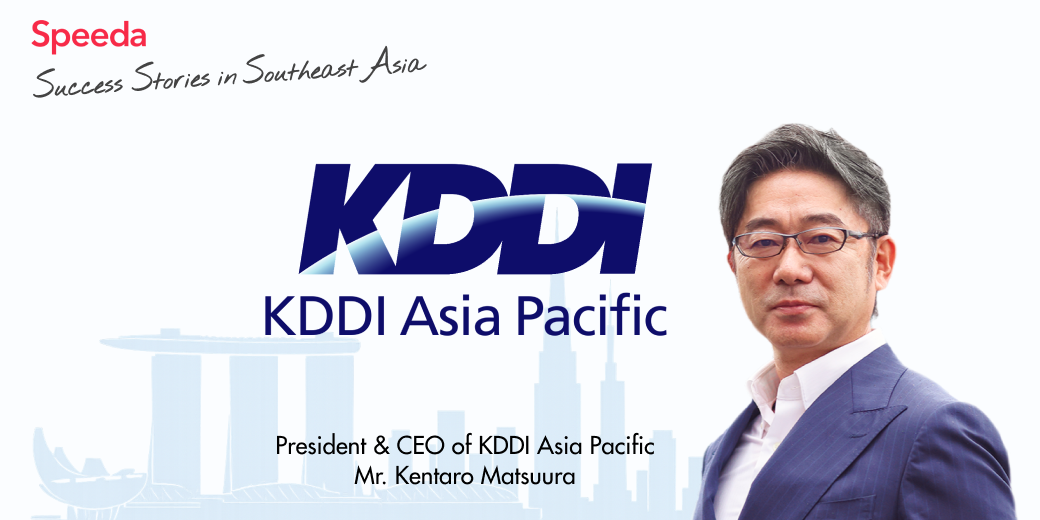
KDDI Asia Pacific Mr.Kentaro Matsuura | Success Stories in Southeast Asia
Success Stories in Southeast Asia
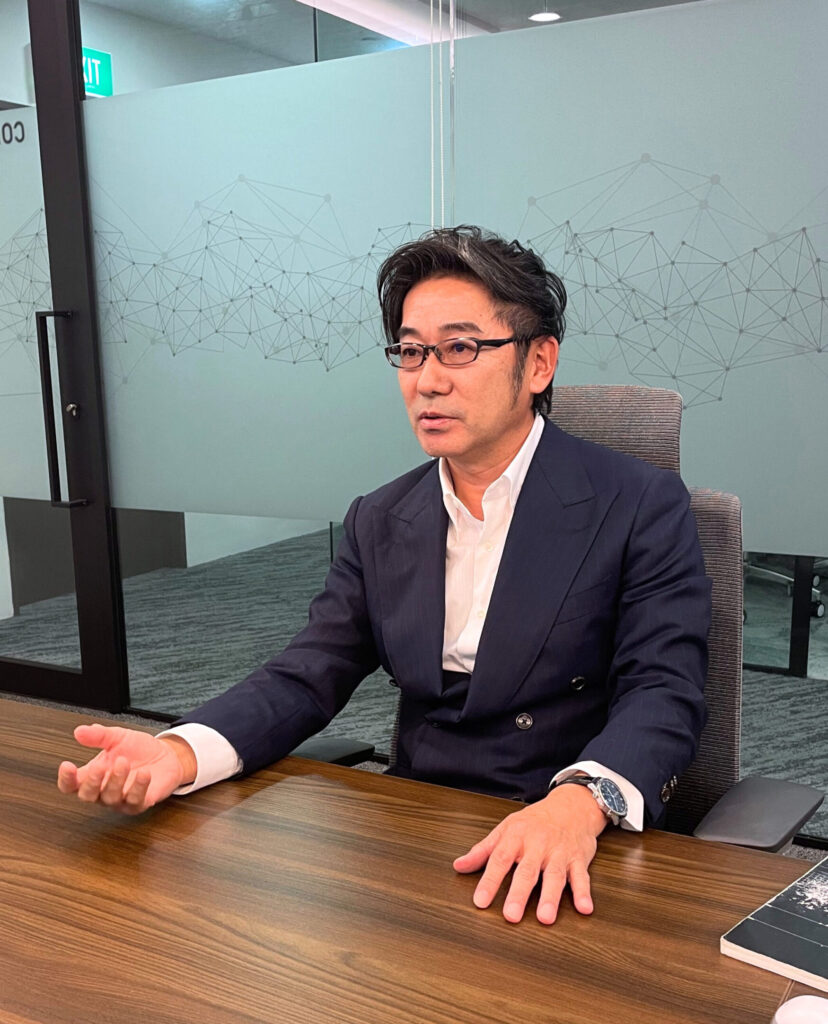
As a kickoff of our “Success Stories in Southeast Asia” series, we spoke with Mr. Kentaro Matsuura, President and CEO of KDDI Asia Pacific.
|Introduction
Established as a key player in the KDDI global network, KDDI Asia Pacific is a leading telecommunications and IT solutions company with operations spanning 15 countries across the APAC region.
The company’s mission is to provide comprehensive ICT solutions and support for a wide range of clients, from system integration to data center services and connected car technologies.
Leveraging its extensive expertise and strategic position as the command center for the entire region, KDDI Asia Pacific is committed to driving innovation and fostering sustainable growth in the dynamic Asian market.
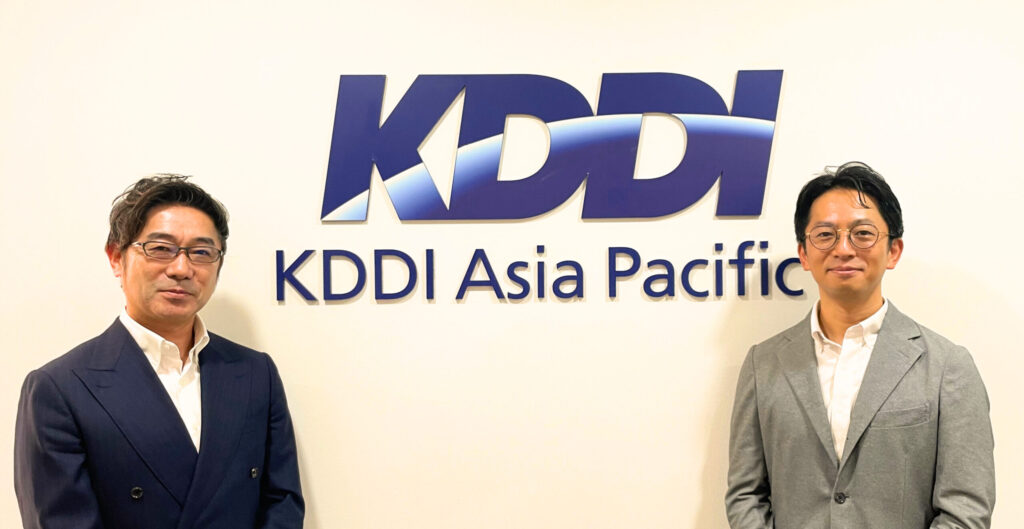
“KDDI’s Philosophy for Success in APAC: Sustainable Growth Through Localization and Co-creation”
– Please share with us about KDDI Asia Pacific’s business mission and the role of Singapore.
Mr. Matsuura: Currently, our company operates in 15 countries, from Dubai in the Middle East to Southeast Asia, Australia, Taiwan and South Korea. We have positioned Singapore as the command center for the entire APAC region, consolidating key functions such as strategy, technology, finance, human resources, sales, and governance.
This structure, which models a decentralized global management approach, allows each base to leverage its unique strengths and replicate successful cases across the entire organization to drive growth.
– Could you please describe your main businesses in APAC?
Mr. Matsuura: Our business is composed of four main portfolios. The first is our System Integration (SI) business, which accounts for about 80% of our revenue. We cover everything from the physical layer to the cloud, with approximately 500 of our 1,000 staff being in-house engineers who provide tailored solutions to our customers’ challenges. This business, which can be described as “labor-intensive,” is something I believe will not be replaced by AI, as it involves a deep, personal commitment to solving each client’s unique problems.
The second is our Interior Design business. We are focusing on this in the Philippines, India, and Malaysia. This business has a very high affinity with our ICT services, as clients often want a one-stop solution for communication infrastructure, networking, interior design, and furniture when moving or renovating offices.
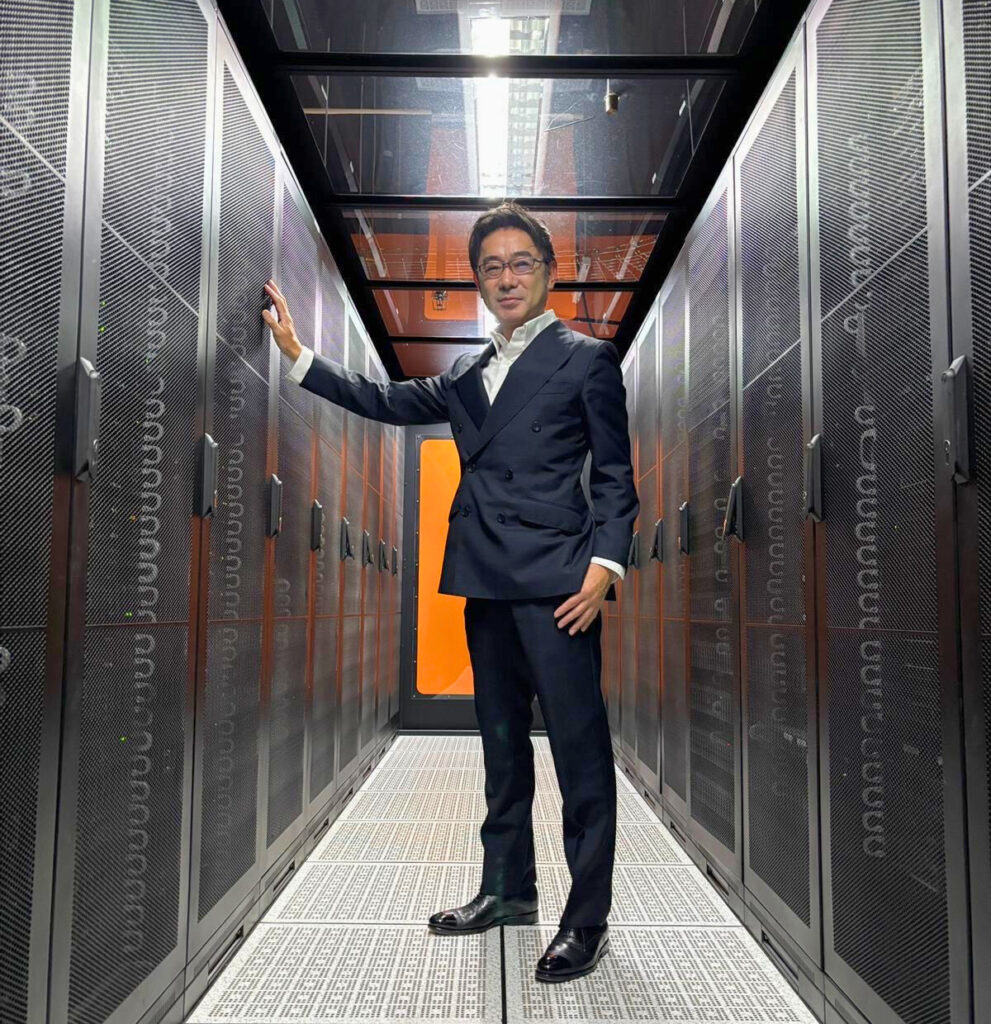
The third is our Data Center (DC) business. We have data centers in Singapore, Thailand, and Vietnam, and we actively seek synergy with our SI business. In Thailand, we launched a new facility in 2023. By leveraging our strengths as a telecommunications carrier, we have launched a “Connectivity-type” model that prioritizes interconnection and redundancy. This has fostered a vibrant ecosystem that attracts cloud providers like AWS and various SI vendors, leading to significant growth.
Lastly, we also provide IoT connection services for connected cars, which we believe will play a key role in the development of future mobility.
In Singapore, revenue from non-Japanese customers have now reached 50%. The key to this success has been our team of local staff, led by a local sales head. They have obtained top-tier certifications from global vendors like Cisco and Fortinet, which has allowed them to secure many referral-based projects.
– What are your future business strategies?
Mr. Matsuura: Firstly, we are actively considering M&A to complement our telecommunications capabilities and create a new pillar to follow our SI business.
We are also strengthening our initiatives for Green Transformation (GX). In addition to providing a dashboard that visualizes CO₂ emissions, we also offer concrete solutions that lead to actual power reduction, such as leak detection and optimization of air conditioning and compressors. This “implementation capability” is the core strength of our GX business.
Furthermore, we want to export Japan’s “au Economic Zone” model to Southeast Asia. We aim to deploy this model, which uses telecommunications as a foundation to expand into various services such as banking and insurance, by collaborating with local telecommunications carriers and conglomerates.
– You have achieved great success. What is the philosophy and leadership style that drives you?
Mr. Matsuura: My time in Myanmar was a turning point in my career. I launched a corporate telecommunications business from scratch, established a nationwide fiber-optic network through a partnership with the state-owned Myanmar Post and Telecommunications (MPT), and built a strong network with major local banks and influential companies. The connections I made then are a great asset to me today.
My collaboration with trading companies was also a valuable experience. I realized that their strong professional network, expertise in launching new overseas businesses, and, above all, their swift crisis management capabilities are indispensable for our international operations.
What I value most in management is “people.” I have instilled in our Japanese expatriates the belief that we are not superior to our local staff, but rather that our business is built on their contributions. While I believe in treating my team with affection, I also make sure to communicate my honest feelings in a direct and heartfelt manner.
I also make sure to express my gratitude to our local staff for working with us. We have an awards program that invites our best staff to visit our headquarters in Japan to boost their motivation and respect for the company. I believe that saying “Thank You” is the most important thing for building a strong organization.
– Lastly, could you tell us about your personal commitment to self-improvement?
Mr. Matsuura: I always tell my team members, “If you don’t focus on self-improvement, you’ll be left behind.” I have personally been deeply influenced by a particular book on management and accounting, which led me to attend an intensive accounting training camp. Through this experience, I gained a keen sense for making our finances more streamlined. I believe this has contributed to our profit growth by allowing me to eliminate waste and focus on ‘maximizing sales and minimizing costs’.
While I now delegate areas I feel are stable to other CXOs and focus on creating new businesses, my commitment to learning remains.
I make a point of taking time to reset on weekends, relaxing in a cafe with a book and thinking about the future. This is a practice I’ve adopted from a teaching to dedicate one weekend day to rest and another to reflection.
I take pride in the fact that my philosophy of valuing people and continuous learning is the greatest driving force behind KDDI’s sustained growth in Southeast Asia and is establishing a new model for Japanese companies in the region.
Interview Date: August 18, 2025
The content of the interview article, as well as the affiliations and titles of the individuals mentioned, are based on information as of the time of the interview.
- Recommended Content