



 speeda.sea@uzabase.com
Resource Center
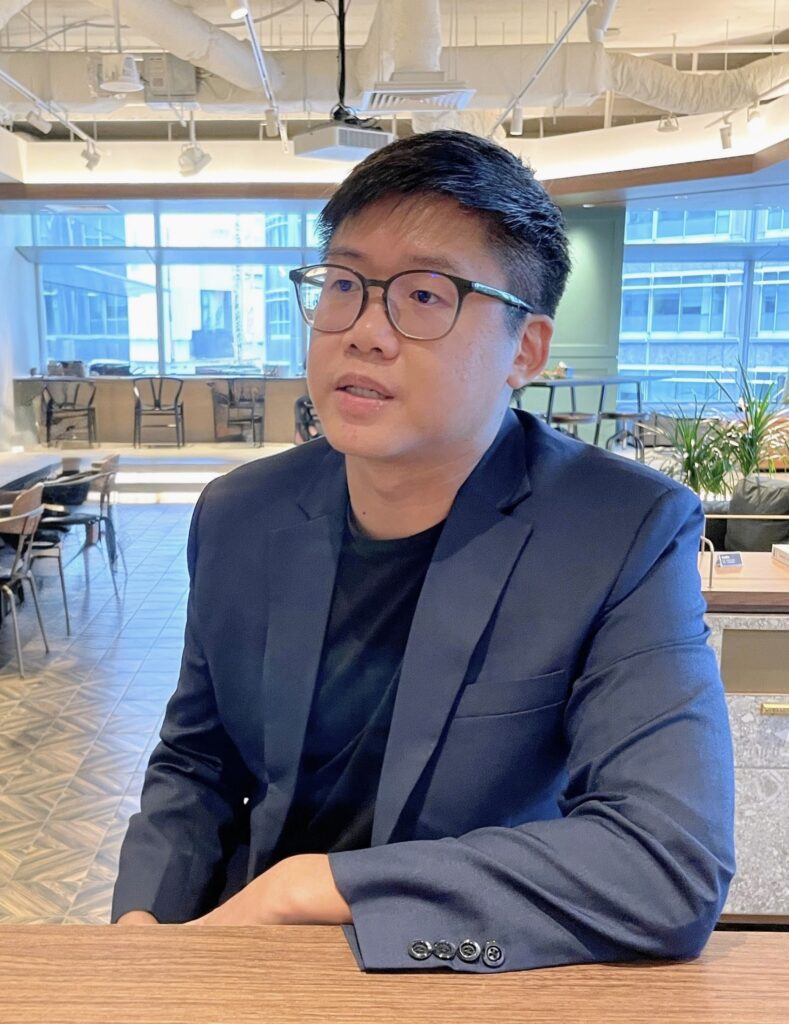
Sealed Network Founder & Executive Director Benjamin Emmanuel Lee | Top Management Interview
Top Management Interview
In 2026, Sealed Network—an expert network renowned for its deep “offline insights” across Southeast Asia—will officially join the Uzabase Group (read the full release from December 2025 here).
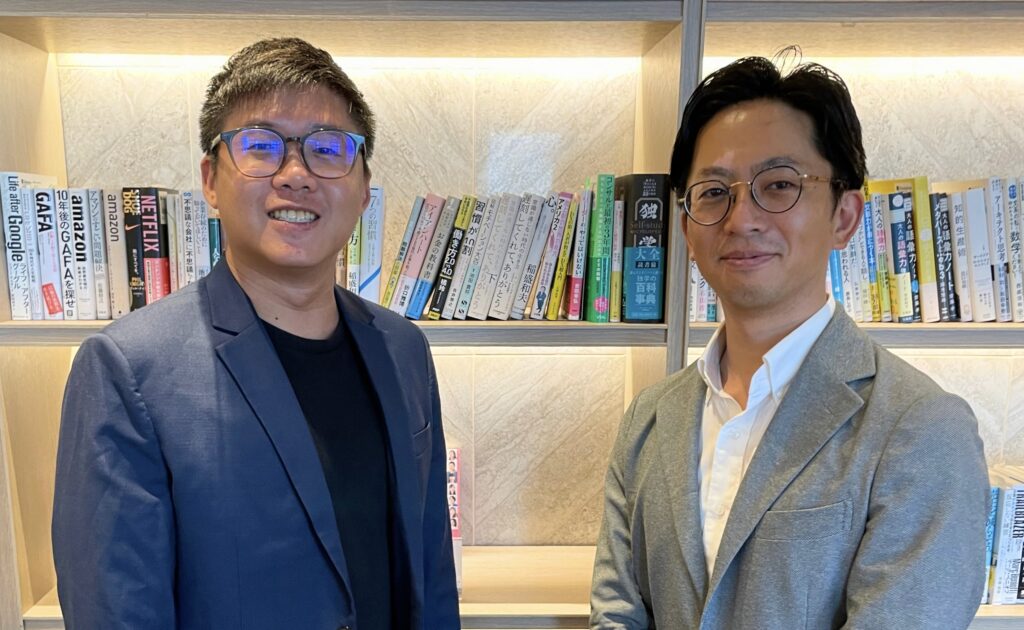
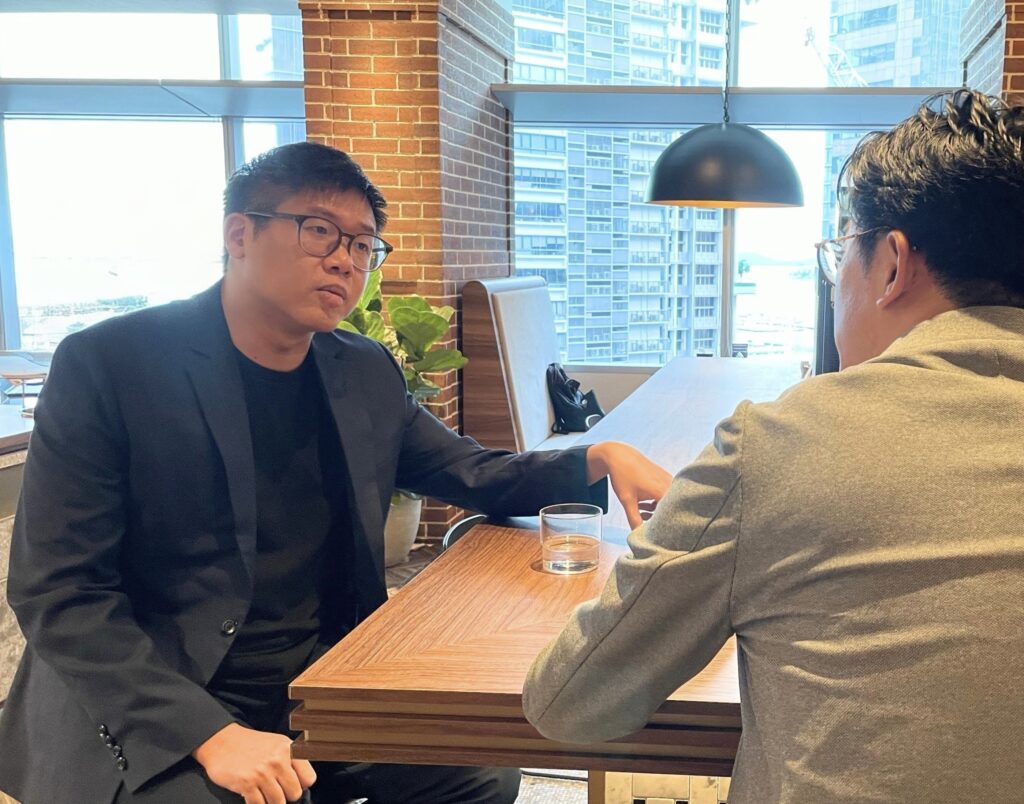
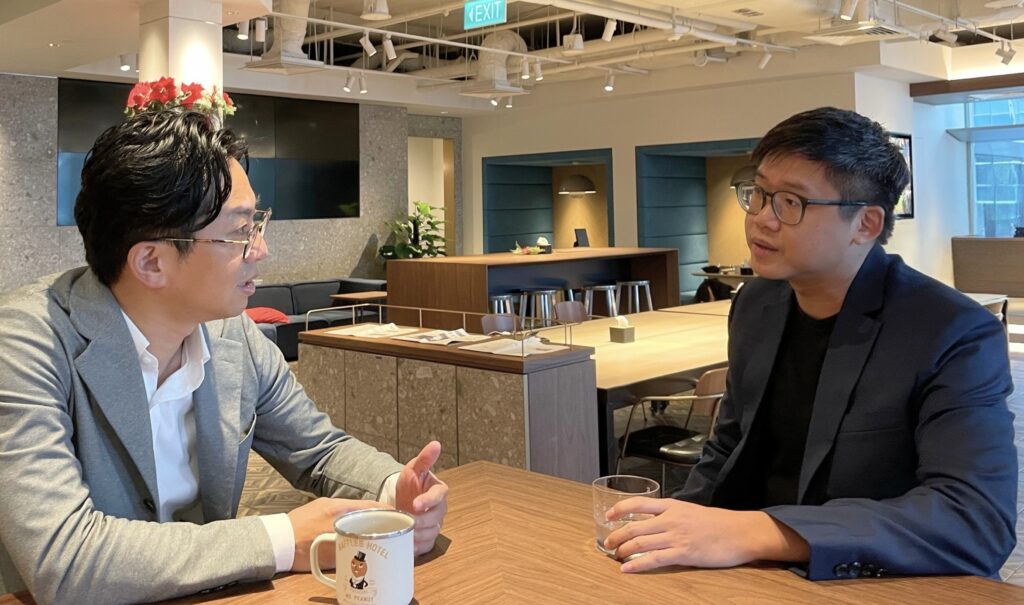
In anticipation of this major milestone, Yasunori Naito, CEO of Speeda Southeast Asia, sat down with Benjamin Emmanuel Lee, founder of Sealed Network, for an in-depth conversation. Drawing from his experience on the front lines of Grab’s fierce battle for market share against Uber, Benjamin shares his perspective on the essential conditions for winning in Southeast Asia. From the synergy between Speeda as the “perfect map” and Sealed as the “expert guide,” to their robust compliance framework and the untold story of the company’s founding, we explored the future of data-driven decision-making in the region.
Introduction & Vision
Naito: Ben, thank you for joining us today. To start, could you please tell us about Sealed Network?
Benjamin: Thank you, Naito-san.
Sealed Network is a Southeast Asia-focused Expert Network. Simply put, we connect global consulting firms, investment funds, and corporate strategy teams with top-tier industry professionals across the Southeast Asia region.
We were founded on a crucial realization: Southeast Asia is highly fragmented—across borders, languages, and regulations.
Because of this extreme fragmentation, business data isn’t standardized or centralized like in the US or Japan. It rarely becomes publicly available data. Instead, the most valuable insights remain ‘offline,’ fragmented across the region and locked in the heads of local operators, regulators, and business owners in specific niches.
Sealed exists to bridge this Information Asymmetry. We function as a gateway for organizations to access the ‘hidden’ human intelligence that you cannot find on Google or in standard market reports.
Naito: That is a crucial point. Many global expert networks also operate here, but they rely heavily on LinkedIn. You often mention that the most valuable information in Southeast Asia is ‘offline.’ Why is this distinction so important for doing business in markets in Southeast Asia such as Indonesia or Vietnam?
Benjamin: It’s critical because of the ‘Digital Divide’ in professional identity.
If you need to interview a VP of Marketing in New York or London, you can find them on LinkedIn. Similarly, if you are looking for experts in Tokyo, Uzabase connects you to a vast network via NewsPicks.
But if you want to understand the waste management supply chain in Jakarta, or the construction sector in Manila, it’s a different story. The profiles of key decision-makers—the ‘Uncles’ and ‘Aunties’ running these local empires—are rarely online. They are not on LinkedIn. Getting connected in the inner circle is very important.
If you rely only on LinkedIn, you are only seeing the ‘Westernized’ layer of Southeast Asia. You miss the local gatekeepers. Sealed is different because we have local teams on the ground who recruit these ‘offline’ experts through trust and referrals. We find the people that Google can’t find.
The Future with Uzabase
Naito: As Sealed officially joins the Uzabase Group in 2026, what are your expectations for the future?
Benjamin: I am incredibly excited about the synergies.
First, we can now unlock Japan for Sealed’s global clients by offering access to UB’s nearly 200,000 Japanese experts—a highly localized market that global players struggle to navigate.
Second, as Japanese expansion into Southeast Asia accelerates, I look forward to connecting Speeda users with our hyper-local experts.
Ultimately, building a bridge between Japan’s ‘craftsman mindset’ of professional excellence and Southeast Asia’s local reality is what truly excites me. This collaboration is key to supporting our clients globally.
Synergy with Speeda
Naito: Our users at Speeda use our platform to visualize Industry Overviews, track New Business Trends, and identify Growth Drivers. However, even with this high-quality data, they often face ‘Contextual Blindness’ when entering a market.
Benjamin: How do you see Sealed fitting into the ecosystem of a user who already has access to Speeda?
Naito: I think of it as a ‘Map and Guide’ relationship. Speeda provides the best ‘Map’ available. It gives the Speeda users the high-level terrain: market size, key players, and financial health. They cannot start a strategy without it.
But even the best map won’t tell you that a specific road is blocked by a local protest, or that a bridge is actually unsafe. Sealed is the ‘Local Guide.’
Speeda helps the users identify ‘Where to play’ (the market opportunity). Sealed helps them develop ‘How to win’ (the execution strategy).
Benjamin:Understood. Speeda provides the essential data and framework. Sealed provides the on-the-ground ‘context’ that brings that data to life. Without Speeda, you are lost without a map. Without Sealed, you might walk blindly into a trap. You need both to survive and win.
Specific Use Cases (Practical Application)
<Case1: Corporate planning, Corporate Development>
Naito: Let’s look at a Corporate Planning team in Tokyo or a Regional Headquarter in Singapore. They might see trending new business opportunities on Speeda—such as Data Centers, Waste Management, or EV Battery Recycling. They can see the future market size and recent investments on our platform.
However, the big question remains: ‘Is this business opportunity actually viable for us?’ Can you share how Sealed helps clients validate the on-the-ground reality in these hype sectors?
Benjamin: This is where we see the most value add: ‘Feasibility Checks.’
For example, let’s take Data Centers. Speeda might show you a chart indicating massive demand growth in a specific province in Vietnam. It looks like a gold mine.
But if you hire Sealed to interview a local grid operator or an industrial park manager, they might tell you: ‘Yes, demand is high, but the local power substation is at max capacity and won’t be upgraded for another 4 years.’
Suddenly, that ‘Gold Mine’ becomes a ‘No-Go.’ And it helps you to think of this opportunity from a different angle.
Or in Waste Management—the data shows a growing market, but our expert might reveal that licenses are only granted to companies with a specific local partner structure. Your next step can be to identify the potential partners.
We help clients distinguish between a Market Opportunity (Theoretical) and a Business Opportunity (Actionable) as such.
<Case2: Deal sourcing for M&A, Target company screening for sales>
Naito: That reality check is crucial. Moving to M&A—one of Speeda’s most popular features is using our Financial Database to generate a ‘Target List’ of potential partners. Once a client has a list of 50 financially sound companies, how can Sealed help them narrow it down to the top 10? How do you help them see beyond the balance sheet?
Benjamin: Financials are history; people are the future.
Speeda is perfect for the Quantitative Screen—removing the companies that are unprofitable or too small. But once you have that ‘Long List’ of 50, you need a Qualitative Screen.
We help you interview former employees, suppliers, or distributors of those target companies.
- Does the owner pay suppliers on time?
- Is the reported revenue real, or is it ‘channel stuffing’ (forcing stock onto distributors) just to make the books look good?
- Is the culture professional, or is it a toxic family dictatorship?
You can’t see ‘reputational risk’ on a balance sheet. We help you pick the 10 partners that aren’t just rich, but are also reliable.
<Case3: Develop Marketing Strategy>
Naito: For Japanese expats stationed in the region, or sales planning professionals, they might see an industry trend on Speeda showing a local competitor gaining massive market share. The data shows the result, but not the cause. Can you share an example of how an expert interview can reveal the hidden mechanics explaining these trends?
Benjamin: Absolutely. We see this often. A Japanese client sees a local competitor growing 30% YoY while they are flat. They assume it’s product quality or price. Typically, when sales are sluggish, a Japanese company earnestly focuses on improving the product or service itself.
However, when we interviewed a former Sales Director of that competitor, it became clear that the dynamics in the market were working in a very different way. It wasn’t differences in product quality or features that mattered, but how incentives were structured within the distribution channel — and that ultimately determined success in the market.
Naito: That’s a very interesting point. In business development discussions, we usually focus on identifying customer needs and ensuring our product matches those needs—what we call ‘product-market fit.’ Are you saying that even if the product perfectly matches the market need, there can be other hidden factors preventing growth that you need to uncover?
Benjamin: Exactly. In that example, it was simply a difference in sales tactics and local incentives. The assumption that many Japanese businesspeople hold—that ‘if the service is good, it will sell itself’—doesn’t always apply here.
It’s similar to the culture shock a Japanese person feels when they arrive in Southeast Asia and see business cards treated casually during introductions, or find ice cubes served in their beer at a restaurant. You cannot assume Japanese norms apply. Acquiring that deep, localized knowledge is essential.
Trust & Closing
Naito: Japanese companies are extremely compliance-conscious. I know Sealed has been backed by respected figures like Mr. Koh Boon Hwee and Quest Ventures. Could you briefly touch upon how you ensure compliance and quality to meet the standards of top-tier institutional clients?
Benjamin: Absolutely. For expert network services, compliance is arguably the most important aspect. We treat compliance as our core product, not just a checkbox.
We understand that for a Japanese listed company, Reputational Risk is everything. Because we are vetted by rigorous institutional investors like Quest Ventures and leaders like Mr. Koh Boon Hwee, we have built a ‘Bank-Grade’ compliance framework. We handle this across three key segments:
First, for Experts: Every expert must explicitly opt-in and sign strict Terms & Conditions confirming they will not share Material Non-Public Information (MNPI), trade secrets, or confidential data.
Second, for Clients: We tailor our processes to meet your specific requirements. We remind clients not to ask inappropriate questions, and we offer tools like call recording, transcription, and chaperoning—where a Sealed analyst sits on the call to ensure safety.
Third, for Employers: We respect corporate boundaries. If a company does not wish their employees to be part of our platform, they can simply request an exclusion, and we ensure they are not onboarded.
Our ultimate goal is to allow your team to access raw, critical intelligence without ever touching the ‘third rail’ of insider trading. You are safe with us.
After Hours: The Story Behind Sealed’s Founding
Naito: Ben, thank you again for joining us. We’ve covered a lot of ground today. For this final segment, I’d love to step back and hear the personal story behind Sealed’s founding.
Before we talk about Sealed, I want to ask about your time at Grab. You were there during the intense battle for market share against Uber, correct?
Benjamin: Yes, those were wild times. I was right in the trenches when Grab and Uber were fighting tooth and nail for Southeast Asia.
As you know, Grab eventually won that battle, pushing Uber out of the Singapore market and acquiring their regional operations.
The biggest lesson I learned from that experience was that localization wins. Uber had a great global product, but Grab understood the local nuances—the drivers, the passengers, the payments—better. I realized deeply that you cannot just ‘copy-paste’ a global model into this region. You have to be hyper-local.
Naito: That experience must have shaped your perspective significantly. How did that lead to the founding of Sealed?
Benjamin: The specific concept came to me later, when a friend working at Boston Consulting Group (BCG) introduced me to the expert network industry. I became curious and started researching deeper to see if there were other localized players around the world.
Through that research, I learned about localized networks like Uzabase (MIMIR) in Japan, as well as others focused on China, the Middle East, and Africa. But I found it very interesting that there was no player fully focused on the ASEAN region.
This resonated strongly with my experience at Grab. I knew firsthand how fragmented Southeast Asia is, and that the real insights are often ‘offline.’ We saw a massive opportunity to be the hyper-local bridge for this region. That’s why we founded Sealed in 2019, focused squarely on Southeast Asia from day one.
Naito: Ben, thank you for your time, and to our audience, thank you for reading—we hope this gave you a deeper understanding of Uzabase’s expansion in Asia and the unique value Sealed Network brings to the table.
-End of interview-
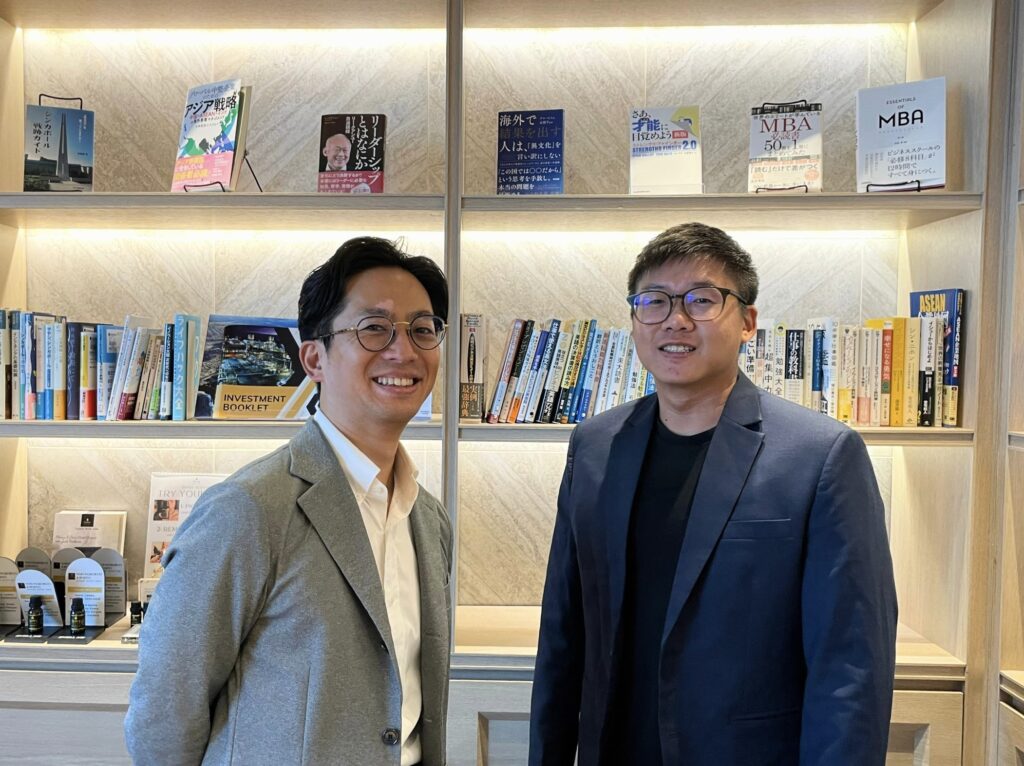
Interview Date: December 19, 2025
The content of the interview article, as well as the affiliations and titles of the individuals mentioned, are based on information as of the time of the interview.
- Recommended Content